As a roofing business owner, you’re constantly juggling crews, customer expectations, and business operations. The last thing you need is to waste your marketing budget on digital advertising that doesn’t deliver. With both Google Ads and Facebook Ads promising to bring in qualified leads, how do you decide where to invest your limited time and resources?
The truth is, both platforms can work for contractors—but they work differently and excel in different situations. What brings success to one roofing company might drain the budget of another without delivering results. Understanding these differences is crucial for making informed decisions about your digital marketing strategy.
Key Takeaways
-
Intent vs. Discovery: Google Ads targets people actively searching for roofing services (high intent), while Facebook Ads reaches potential customers before they start searching but offers powerful demographic and interest-based targeting.
-
Cost differences matter: Google Ads for roofing typically costs $6-10 per click with conversion rates of 3-5%, while Facebook Ads average $2-4 per click with 1-2% conversion rates. Your overall ROI depends on your specific market and campaign quality.
-
Visual impact varies: Facebook offers rich visual formats ideal for showcasing your completed projects and transformations, while Google primarily relies on text in search ads with limited visual options in display campaigns.
-
The sales cycle impact: Google Ads typically generates leads needing service now (shorter sales cycle), while Facebook can build brand awareness and capture information from future customers (longer nurturing required).
-
Measurement approaches differ: Google provides clearer attribution for direct lead generation, while Facebook excels at influence measurement across the customer journey, requiring different tracking strategies.
-
Most successful contractors use both platforms strategically: 72% of contractors with consistent lead generation use a combination of both platforms rather than relying exclusively on either Google or Facebook.
What’s the Difference Between Google Ads and Facebook Ads for Contractors?
They Target Different Customer Mindsets
Google Ads and Facebook Ads operate on fundamentally different principles when it comes to connecting with potential customers.
Google Ads works on a search-based model. When someone types “roof repair near me” or “roofer in [your city]” into Google, they’re actively looking for a service like yours. This is called high-intent traffic—these people are already in the market for what you offer. You’re catching them at the moment they’ve identified a need and are looking for a solution.
Facebook Ads, on the other hand, operate on an interruption-based model. People aren’t on Facebook searching for roofing services—they’re scrolling through family photos, news, and updates from friends. Your ad interrupts this browsing experience. But what Facebook lacks in intent, it makes up for with incredible targeting capabilities. You can target homeowners in specific neighborhoods, of certain ages, who’ve recently purchased a home, or who’ve shown interest in home improvement.
-
Google Ads strengths for contractors:
- Captures customers actively looking for your services
- Provides immediate visibility when someone needs a roofer
- Local service ads include Google Guaranteed badge, boosting trust
- Direct connection to people ready to hire
-
Facebook Ads strengths for contractors:
- Creates awareness before the need becomes urgent
- Powerful demographic targeting (homeowners in specific zip codes)
- Excellent for building your brand and showcasing work
- Can generate leads from people who will need service in the future
-
When each platform delivers better ROI:
- Google: Immediate lead generation; emergency services; dense urban markets
- Facebook: Brand building; seasonal promotions; competitive markets where search ads are expensive
“The fundamental difference is timing,” says a digital marketing specialist at a home service marketing agency. “Google connects you with people who need service now, while Facebook introduces you to people who will need service eventually.”
Cost Comparison: Google Ads vs Facebook Ads for Roofing Companies
One of the most significant factors in your decision will be cost. Let’s break down the investment needed for each platform and what you can expect in return.
| Platform | Average Cost Per Click | Typical Conversion Rate | Avg. Cost Per Lead | Best For |
|---|---|---|---|---|
| Google Ads | $6-15 | 3-5% | $150-350 | Immediate needs, emergency repairs |
| Facebook Ads | $2-5 | 1-3% | $75-200 | Brand awareness, seasonal promotions |
While Facebook Ads generally offer a lower cost per click, the conversion rates tend to be lower because the audience isn’t actively searching for your services. Google Ads typically convert at a higher rate but cost more per click. Your actual costs will vary based on:
- Your geographic location and competition level
- The quality of your ads and landing pages
- Your bidding strategy and campaign management
- Seasonal factors affecting demand
According to a study by Forbes Advisor, home service businesses see an average return of $3-5 for every $1 spent on Google Ads, compared to $2-4 for Facebook Ads. However, these numbers can shift dramatically based on your specific market conditions and campaign quality.
For many contractors, learning how Google Ads work for roofing companies is the first step to making an informed decision about where to invest.
Which Platform Has Better Targeting Options for Contractors?
Google Excels at Intent, While Facebook Masters Demographics
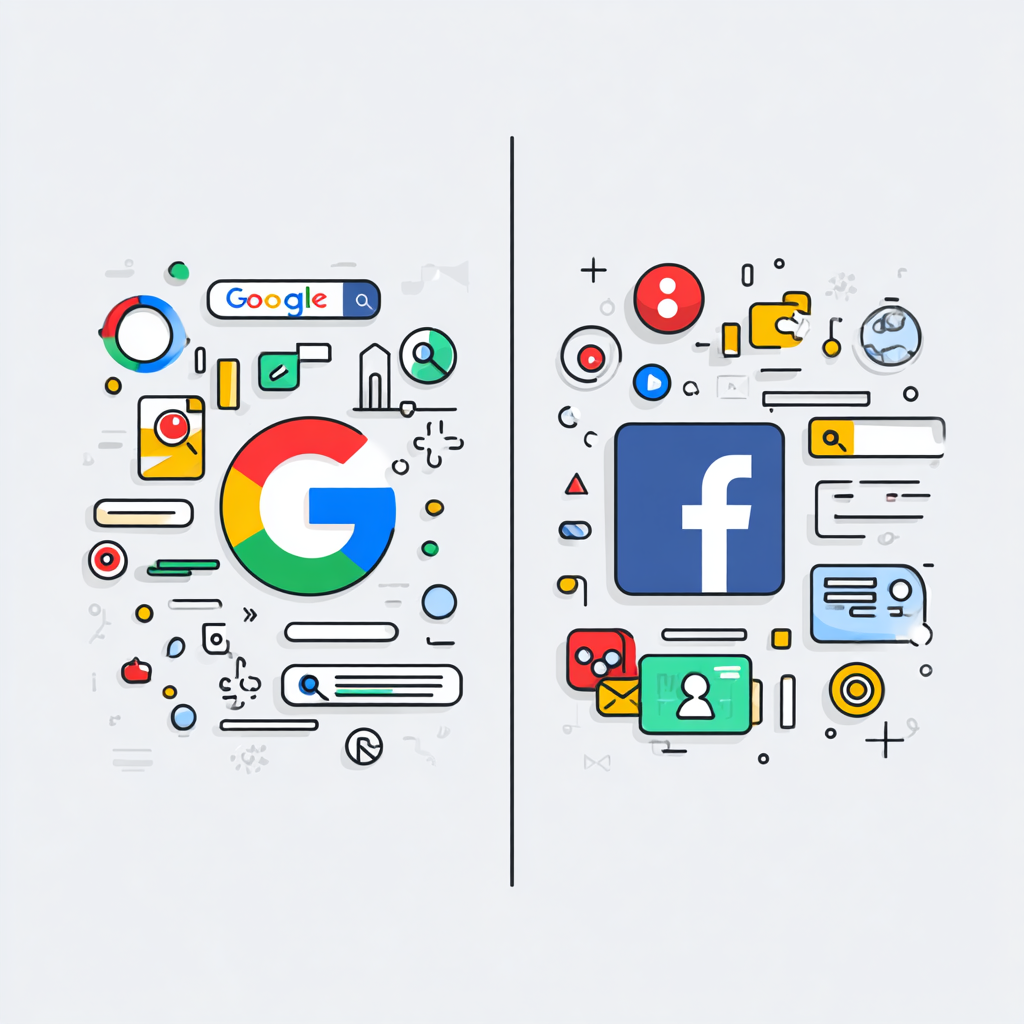
The targeting capabilities of Google Ads and Facebook Ads differ significantly, each with unique advantages for roofing contractors.
Google Ads offers keyword-based targeting, allowing you to show your ads to people actively searching for specific terms related to roofing services. This intent-based approach means you’re reaching people at the exact moment they’re looking for help with a roofing issue. Google also offers:
- Geographic targeting down to specific zip codes
- Local Service Ads that appear at the very top of search results
- Remarketing to people who have visited your website
- The ability to target based on search history and browsing behavior
In 2025, Google’s AI-powered bidding has become significantly more sophisticated, automatically adjusting bids based on the likelihood of conversion and the estimated value of different customers.
Facebook Ads, meanwhile, offers incredibly precise demographic and interest-based targeting that allows you to reach potential customers based on:
- Homeownership status and property attributes
- Age, income level, and family size
- Recent life events like moving or home purchase
- Interests in home improvement, DIY, and property value
- Behavioral targeting based on engagement with similar businesses
Meta Advantage+ campaigns introduced in 2025 have revolutionized Facebook’s targeting by using AI to identify patterns in customer behavior that humans might miss, automatically optimizing campaigns toward the most likely converters.
“We’ve found the most success using Google for immediate lead generation and Facebook for brand building and awareness,” says a marketing director for a multi-location roofing company. “Google brings in the hot leads who need service now, while Facebook helps us stay top-of-mind with homeowners who will eventually need our services.”
For contractors new to Facebook advertising, understanding how Facebook ads can help contractors get more leads is essential before deciding how to allocate your marketing budget.
Sample Facebook Targeting Strategy for Roofers
Here’s an example of a highly effective Facebook targeting strategy for roofing contractors:
PRIMARY AUDIENCE: "Local Homeowners Due for Roof Replacement"
- Location: Your service area (10-25 mile radius)
- Age: 35-65
- Homeowners only
- Length of residence: 15+ years
- Interests: Home improvement, DIY, HGTV, home ownership
- Income: Middle to upper-middle class
- Exclude: Recent engagement with roofing companies

CUSTOM AUDIENCE:
- Website visitors in the past 180 days
- Email list of past customers for referral campaigns
- Lookalike audience based on previous conversions
This targeting approach focuses on homeowners whose roofs may be nearing the end of their lifespan based on the length of residence, while excluding people who have recently engaged with competitors.
How Do Visual Advertising Options Compare Between Platforms?
Facebook Offers Richer Visual Storytelling for Contractors
The visual capabilities of each platform create meaningful differences in how you can showcase your roofing business and completed projects.
Facebook Ads provide robust visual options that are ideal for contractors who want to showcase their work:
- Carousel ads that can display multiple project photos
- Video ads demonstrating your team’s workmanship
- Before/after sliders showing dramatic transformations
- Instagram integration for reaching younger homeowners
- Stories format for behind-the-scenes content
These visual formats allow you to build credibility by showcasing completed projects and satisfied customers—something particularly valuable in the roofing industry where visual proof of quality work matters.
Google Ads, particularly search ads, are primarily text-based, limiting your ability to visually showcase your work. However, Google does offer:
- Text ads with extensions for additional information
- Display ads that can appear on websites across the internet
- YouTube video ads for those with larger budgets
- Local Service Ads with a small profile photo
A 2025 analysis by Concrete CEO found that contracting businesses with strong visual assets saw 37% higher engagement rates on Facebook compared to Google Ads. For contractors with impressive project photos or videos, this gives Facebook a significant advantage.
“We’ve found that showing dramatic before/after roof replacement photos on Facebook generates significant engagement and shares,” explains a successful roofing contractor. “People who weren’t even thinking about their roof start to notice issues after seeing our transformation photos.”
If you’re considering Facebook advertising, learning how to set up a Facebook ad account is a practical first step to leverage these visual capabilities.
Visual Content That Performs Best for Contractors
| Platform | Top-Performing Content Types | Key Visual Elements | Call-to-Action Effectiveness |
|---|---|---|---|
| Before/after photos, Team at work videos, Customer testimonial videos | Show dramatic transformations, Include team members for trust, Use local landmarks | Direct (Call Now) CTAs work for emergency services, while softer CTAs (Free Estimate) perform better for standard services | |
| Simple, direct headlines with location and service keywords, Ad extensions with bullet points | Professional logo, Trust badges (BBB, GAF, etc.), Limited visuals in text ads | Direct CTAs tied to immediate service needs generally outperform educational offers |
When Should Contractors Choose Google Ads vs Facebook Ads?
Match the Platform to Your Specific Business Goals
The right advertising platform depends largely on your specific business situation and immediate goals.
Choose Google Ads when:
- You need immediate leads and have capacity to service new customers right away
- You offer emergency roof repair services
- Your market has just experienced severe weather events
- You have a strong website that converts visitors well
- You’re in a less competitive market where click costs are reasonable
- You want to target specific services (like “hail damage repair” or “roof replacement”)
- You’re focused on direct response and lead generation
Google Ads works best when people are actively searching for your services. It’s particularly effective for emergency service providers or businesses in areas that have recently experienced severe weather. The platform excels at converting high-intent searches into immediate leads.
Choose Facebook Ads when:
- You’re building brand awareness in a new service area
- You’re showcasing your craftsmanship and completed projects
- You’re running seasonal promotions or special offers
- You have strong visual content (project photos, videos, before/afters)
- You want to target specific demographics rather than search intent
- You’re looking to build a pipeline of future customers
- You’re in a highly competitive search market with expensive clicks
Facebook advertising is particularly effective for contractors looking to establish brand presence or showcase visual transformations. It’s also valuable during slower seasons when you’re building a pipeline for future work rather than filling immediate capacity.
According to a 2025 study by Baa Digital, contractors who used a combination of both platforms saw 43% higher lead volume compared to those using just one platform. This suggests that the question isn’t always “either/or” but rather how to effectively use both platforms in a complementary strategy.
“We’ve found that using Google to capture current demand while using Facebook to create future demand gives us the most consistent lead flow throughout the year,” explains the marketing director of a multi-state roofing operation.
Many contractors are discovering that SEO and Google Ads work together to drive more leads than either strategy alone, adding another dimension to their digital marketing approach.
Seasonal Considerations for Contractors
Your platform choice should also reflect seasonal trends in the roofing industry:
| Season | Google Ads Strategy | Facebook Ads Strategy |
|---|---|---|
| Spring | Target searches for “spring roof inspection,” “winter damage repair” | Awareness campaigns about post-winter inspections, highlighting damage signs |
| Summer | Focus on emergency repair terms, storm damage | Showcase before/after transformations, team comfort measures in heat |
| Fall | Target “prepare roof for winter,” gutter cleaning terms | Educational content about winter preparation, limited-time offers |
| Winter | Emergency repair and snow load keywords | Educational content, early-booking discounts for spring work |
Is it Better to Use Both Google and Facebook Ads Together?
The Power of a Multi-Channel Approach for Contractors
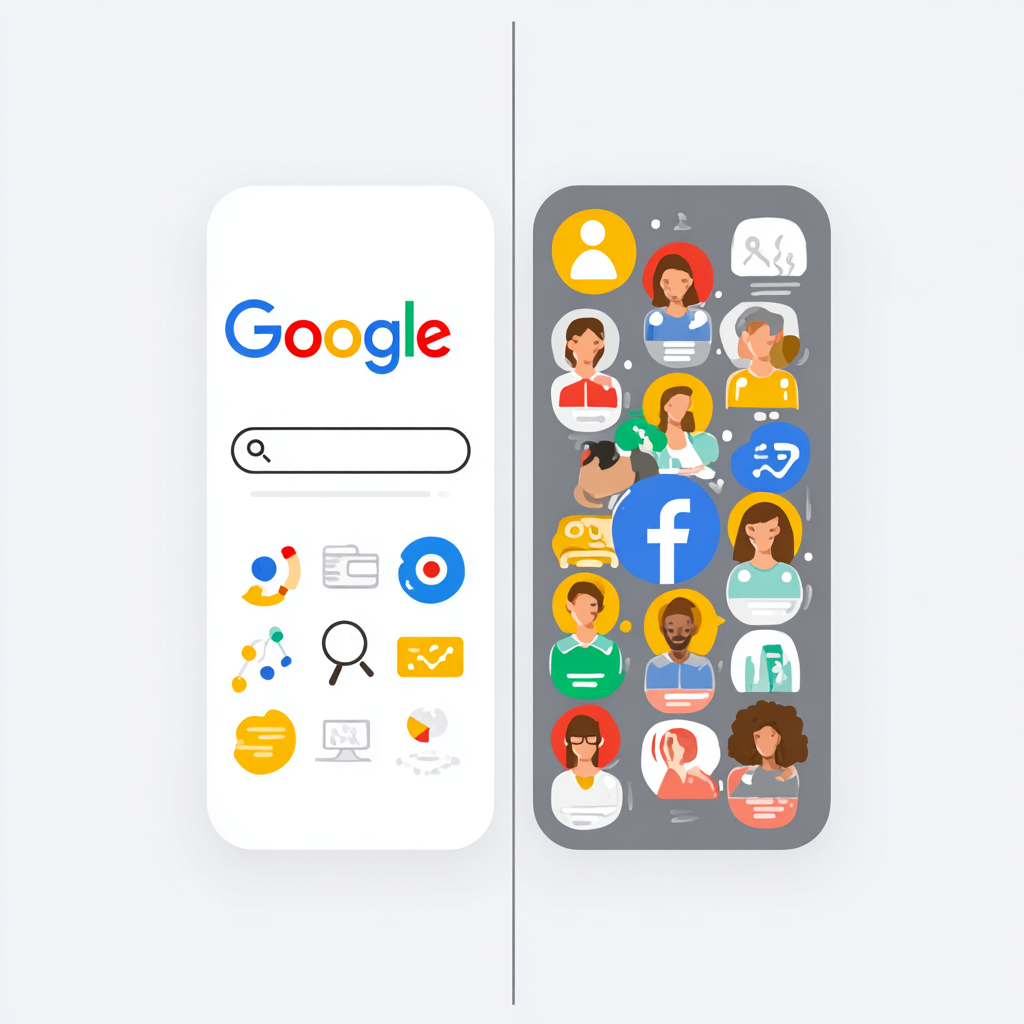
For most roofing contractors, the question isn’t really which platform to use exclusively, but rather how to effectively combine them to create a comprehensive digital marketing strategy.
A multi-channel approach creates several advantages:
-
Complete Customer Journey Coverage: Google captures high-intent searches while Facebook builds awareness earlier in the buying cycle.
-
Consistent Brand Presence: When potential customers see your business on multiple platforms, it builds credibility and trust.
-
Remarketing Opportunities: Users who find you through Google can be remarketed to on Facebook with more detailed information.
-
Complementary Data: The analytics from both platforms provide a more complete picture of your marketing performance.
-
Risk Mitigation: Relying solely on one platform puts you at risk if that platform changes its algorithm or pricing structure.
Based on a 2025 contractor marketing survey, businesses using both Google and Facebook Ads reported 32% higher customer acquisition rates compared to those using just one platform. The synergy between platforms creates a more robust marketing ecosystem.
Here’s how a strategic multi-channel approach might look for a roofing contractor:
- Google Ads: Target high-intent keywords like “roof replacement near me” or “emergency roof repair” to capture immediate needs
- Facebook Ads: Run awareness campaigns to specific neighborhoods showing before/after roof transformations
- Remarketing: Show Facebook ads to people who visited your website from Google but didn’t convert
- Seasonal Adjustment: Increase Google budget during storm season; increase Facebook during slower months
“We use Google Ads as our primary lead generation tool, but Facebook helps us stay visible to past customers and build our brand in new neighborhoods,” explains a successful roofing company owner. “When we coordinate messages across both platforms, we see significantly better results.”
Sample Multi-Channel Campaign Calendar
Here’s a simplified example of how contractors can coordinate Google and Facebook advertising throughout the year:
JANUARY-FEBRUARY (OFF-SEASON)
- Google: Low budget, focus on emergency repairs
- Facebook: Higher budget, early-bird specials for spring, educational content

MARCH-MAY (RAMP-UP)
- Google: Increasing budget, spring inspection keywords
- Facebook: Neighborhood targeting, spring maintenance messaging

JUNE-AUGUST (PEAK SEASON)
- Google: Maximum budget, emergency and replacement terms
- Facebook: Showcase current projects, happy customer testimonials

SEPTEMBER-NOVEMBER (STEADY)
- Google: Strong budget, fall maintenance and winter prep terms
- Facebook: Winter preparation messaging, special offers

DECEMBER (PLANNING)
- Google: Reduced budget, emergency services only
- Facebook: Holiday messaging, early booking for spring projects
This coordinated approach ensures you’re capturing immediate needs through Google while building awareness and future opportunities through Facebook.
How Do You Measure Success Differently Between Google and Facebook Ads?
Tracking Performance Requires Different Metrics for Each Platform
Measuring success accurately requires understanding the different strengths and intended outcomes for each platform.
Google Ads Metrics to Track:
- Conversion rate (leads per click)
- Cost per lead
- Keywords driving conversions
- Geographic performance
- Quality Score (affects your ad costs)
- Click-through rate
- Return on ad spend (ROAS)
For Google Ads, success is typically measured in direct response metrics—how many leads did you generate and what did they cost? The platform’s intent-based nature means users are actively seeking your services, so conversion metrics should reflect this immediacy.
Facebook Ads Metrics to Track:
- Engagement rate (likes, comments, shares)
- Video view completion rate
- Lead form completion cost
- Brand awareness lift
- Website traffic quality (time on site, pages viewed)
- Audience growth
- Indirect conversions (view-through attribution)
Facebook success often involves upper-funnel metrics like brand awareness and engagement before transitioning to lead generation metrics. Because users aren’t actively searching for your services, the path to conversion is typically longer.
“The biggest mistake contractors make is judging Facebook with Google metrics,” explains a digital marketing specialist for contractors. “Facebook builds your brand and creates future customers—that value doesn’t always show up in immediate conversion data.”
In 2025, contractors are increasingly using Customer Relationship Management (CRM) systems to track the full customer journey from first ad impression to completed job. This holistic view helps attribute value to both platforms based on their role in the customer acquisition process.
Campaign Measurement Checklist
To accurately assess campaign performance across both platforms:
- Set up proper conversion tracking on your website for both Google and Facebook
- Establish different KPIs that reflect each platform’s strengths
- Use unique phone numbers for each platform to track call sources
- Implement long-term tracking to capture Facebook’s influence on future conversions
- Monitor quality of leads not just quantity (job size, close rate, etc.)
- Track customer acquisition cost across the entire funnel
- Use attribution models that recognize both platforms’ contributions
Closing Thoughts
The debate between Google Ads and Facebook Ads for contractors isn’t about finding a single “winner” but understanding how each platform serves different purposes in your overall marketing strategy.
Google Ads excels at capturing immediate demand—connecting with homeowners actively searching for roofing services right now. The platform delivers high-intent leads with shorter sales cycles but typically at a higher cost per click. For emergency services or contractors with immediate capacity to fill, Google Ads provides the most direct path from ad to paying customer.
Facebook Ads, meanwhile, excel at creating demand—building awareness with homeowners who will eventually need your services. The platform offers superior demographic targeting and visual storytelling capabilities at a lower cost per impression. For brand building, showcasing your work, or developing a pipeline of future customers, Facebook provides unmatched opportunities.
Most successful roofing contractors find that a balanced approach yields the best results. By using Google Ads to capture existing demand while simultaneously building future demand through Facebook, you create a sustainable marketing ecosystem that delivers consistent results throughout the year.
Ready to develop a custom advertising strategy that leverages the strengths of both platforms? Schedule a discovery call with digital marketing experts who understand the unique challenges of the roofing industry.
Frequently Asked Questions
How much should a roofing company spend on Google Ads vs. Facebook Ads?
The ideal budget depends on your business size and goals, but generally, a starting point is allocating 60-70% to Google and 30-40% to Facebook. For a typical mid-sized roofing company, this might translate to $2,000-3,000 monthly for Google and $1,000-1,500 for Facebook. During peak season or after severe weather events, consider temporarily increasing your Google budget to capture immediate demand.
How long does it take to see results from Google Ads vs. Facebook Ads?
Google Ads typically produce faster results, often generating quality leads within the first week if your campaigns are properly set up. Facebook Ads generally take longer to build momentum, with meaningful results emerging after 2-4 weeks as the platform optimizes your campaigns and your brand awareness builds. Both platforms require ongoing optimization to maintain and improve performance.
Should I run both types of ads year-round?
Yes, but with seasonal adjustments. During peak season (spring/summer), emphasize Google Ads to capture high-intent searches. During slower seasons (fall/winter), increase your Facebook budget to build awareness and create a pipeline of future customers. Maintaining some presence on both platforms year-round ensures consistent brand visibility and lead generation.
Which platform works better for emergency roof repairs?
Google Ads significantly outperforms Facebook for emergency services. When homeowners experience leaks or storm damage, they immediately search Google with high-intent terms like “emergency roof repair near me.” For these urgent situations, Google’s search-based model connects you directly with customers who need immediate help, making it the clear choice for emergency service marketing.
How do I create effective ads for each platform?
For Google Ads, focus on clear, direct headlines that include your service and location (e.g., “Expert Roof Replacement in [City]”). Highlight credentials, guarantees, and response times. For Facebook Ads, use striking visuals like before/after photos or videos of your team in action. Tell stories about how you solved problems for homeowners and include social proof through customer testimonials. The fundamental difference is that Google ads should be direct and service-focused, while Facebook ads should be visual and emotionally engaging.
Can I use the same landing pages for Google and Facebook traffic?
While you can, it’s not ideal. Google Ad traffic is looking for immediate information about your service, pricing, and availability—these landing pages should be direct and conversion-focused. Facebook traffic is often less familiar with your company and earlier in their decision process—these landing pages benefit from more educational content, social proof, and brand storytelling before making the sales pitch. At minimum, adjust your call-to-action to match the user’s likely position in the buying journey.
Table of Contents
Keep on learnin'
Related Articles
The top 5 marketing mistakes roofing companies make (And how to fix them)