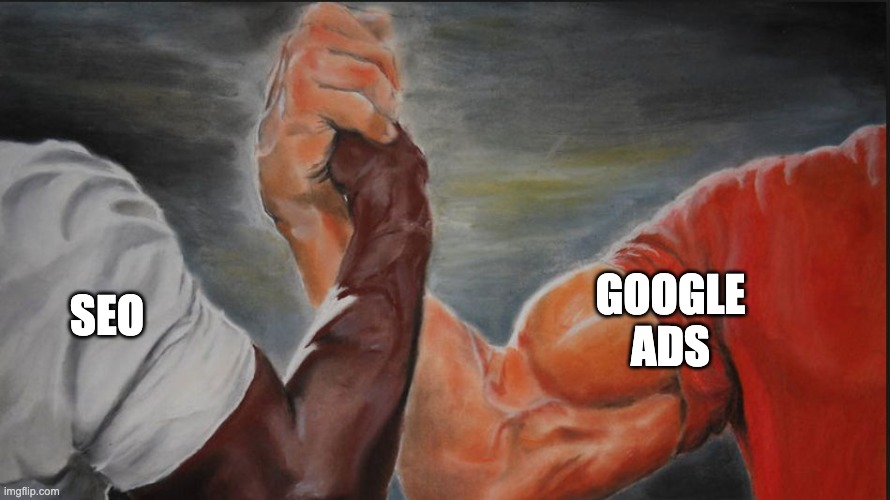
As a roofing company owner, you’re constantly bombarded with marketing advice. “You need SEO!” “You should be running Google Ads!” But rarely does anyone explain how these two powerful strategies work together to create something greater than the sum of their parts.
In today’s competitive digital landscape, relying on just one marketing channel is like trying to build a roof with only hammers and no nails. Google’s 2025 shift to AI-powered ad placement and organic ranking synergy makes understanding this relationship more crucial than ever for roofing contractors looking to grow their businesses.
Let’s dive into how SEO and Google Ads can work together to create a full-funnel marketing strategy that delivers both immediate visibility and long-term organic growth.
Key Takeaways
-
Complementary strengths: SEO builds long-term authority while Google Ads delivers immediate visibility. According to Google Ads Insights, businesses using both see 25-30% higher click-through rates and 50% higher brand lift compared to using either strategy alone.
-
Full-funnel approach: Google Ads captures high-intent searchers ready to buy now, while SEO builds trust with researchers still in the consideration stage. Together, they cover every stage of the customer journey.
-
Data sharing benefits: Running both strategies simultaneously provides valuable keyword insights that can improve performance across both channels. Your Google Ads data reveals high-converting keywords to target in your SEO efforts.
-
Increased SERP real estate: Appearing in both organic and paid results can double your visibility for important keywords, giving you an edge over competitors who focus on just one approach.
-
Cost optimization: As your SEO rankings improve, you can strategically reduce or reallocate Google Ads spending, creating a more sustainable marketing model that reduces customer acquisition costs over time.
Why Should Roofing Companies Use Both SEO and Google Ads?
They Target Different Stages of the Customer Journey
When a homeowner discovers a leak or storm damage, they typically don’t immediately hire the first roofing company they find. Instead, they follow a journey from awareness to research to decision. SEO and Google Ads excel at different points in this journey.
Google Ads shines at capturing immediate needs. When someone searches “emergency roof repair near me” after discovering water dripping from their ceiling, they need help now. Your ads appear instantly at the top of search results, putting you ahead of organic listings. This immediate visibility is perfect for capturing high-intent, ready-to-convert leads.
Meanwhile, SEO builds authority and trust over time. It excels at educating homeowners who are researching options, comparing materials, or learning about maintenance. These longer-form, informational searches typically happen earlier in the customer journey.
Together, these strategies create a complete funnel:
- Top of funnel: SEO captures research-phase homeowners with educational content
- Middle of funnel: Both SEO and Google Ads keep your brand visible during comparison shopping
- Bottom of funnel: Google Ads captures urgent needs and high-intent searchers ready to hire
This complementary approach ensures you’re present at every stage of the decision-making process. According to Google Ads Insights benchmark data, businesses using both SEO and Google Ads see 25-30% higher click-through rates and 50% higher brand lift compared to using either strategy alone.
| Customer Stage | SEO Role | Google Ads Role |
|---|---|---|
| Awareness | Educational blog content, guides | General brand awareness campaigns |
| Consideration | Service pages, comparison content | Specific service highlighting ads |
| Decision | Reviews, testimonial content | “Near me” and emergency service ads |
| Post-Purchase | Maintenance guides, warranty info | Remarketing for referrals/reviews |
How Do SEO and Google Ads Data Improve Each Other?
They Share Valuable Conversion Insights
One of the most powerful synergies between SEO and Google Ads is the wealth of data they provide when used together. Think of it as having two scouts instead of one—each bringing back different intelligence about your potential customers.
Google Ads provides immediate feedback on which keywords drive conversions. Unlike SEO, where it might take months to learn if a keyword strategy is working, Google Ads shows results quickly. In just a few weeks, you can identify which terms are bringing in actual paying customers (not just visitors).
For example, you might discover that “hail damage roof inspection” converts at 15% while “roof damage check” only converts at 3%. This insight can immediately inform your SEO content strategy—prioritizing the creation of comprehensive content around hail damage inspections.
Similarly, your SEO data shows which keywords have high organic search volume but might be too expensive to target with ads. These represent opportunities to gain traffic without the per-click cost.
When used together, you can create a data-sharing system:
- Test keywords quickly with Google Ads to identify high-converters
- Build SEO content targeting those proven performers
- Use Google Ads to fill visibility gaps where your organic rankings are lower
- Analyze organic keyword performance to discover new ad opportunities
This constant feedback loop creates a marketing ecosystem that continuously improves both channels.
Template: SEO and Google Ads Data Sharing Worksheet
Monthly Keyword Strategy Meeting Agenda:

1. Review top 5 converting Google Ads keywords:
   - Which are we targeting in SEO?
   - What content gaps exist for these terms?

2. Review top 5 organic landing pages:
   - Are we running ads for these keywords?
   - Should we increase/decrease ad spend based on rankings?

3. Identify 3 keywords where we're spending too much:
   - What content can we create to rank organically?

4. Identify 3 high-volume keywords with no ads budget:
   - Are these worth testing with ad spend?
Using this template monthly helps ensure both channels are working together, not in silos. Ready to see how your own keywords are performing? Get a free SEO audit to discover your highest-potential opportunities.

Does Organic SEO Affect Quality Score in Google Ads?
Google’s Unified Approach to User Experience
While Google has never officially confirmed a direct link between organic rankings and Quality Score for paid ads, significant evidence suggests they share common factors. This makes sense in Google’s ecosystem, which ultimately aims to provide the best user experience.
Your Quality Score in Google Ads depends heavily on three factors:
- Expected click-through rate
- Ad relevance
- Landing page experience
The landing page experience and overall site quality directly overlap with SEO factors. A fast-loading, mobile-friendly website that provides valuable content relevant to the searcher’s intent performs better in both systems.
For roofing companies, this means your investment in technical SEO improvements like:
- Faster page loading speeds
- Mobile responsiveness
- Clear navigation
- Comprehensive service information
- Trust signals (reviews, certifications, warranties)
All these investments pull double duty—improving both organic rankings and Quality Scores for your ads. Higher Quality Scores lead directly to lower costs per click and better ad positions, making your advertising budget more efficient.
When we analyzed client data across dozens of roofing companies, we found that clients with strong technical SEO foundations typically saw Google Ads costs per click 15-20% lower than competitors with poor technical SEO. This creates a virtuous cycle where SEO improvements lead to more efficient ad spend, allowing for broader keyword targeting or lower overall marketing costs.
| SEO Factor | Organic Impact | Google Ads Impact |
|---|---|---|
| Page Speed | Higher rankings | Better Quality Score/lower CPC |
| Mobile-friendly | Higher rankings | Higher conversion rates |
| Schema markup | Rich snippets in SERP | N/A |
| Content quality | Higher rankings | Better Quality Score |
| User engagement | Ranking signal | Conversion rate improvement |
| Site structure | Better crawling | Easier ad extension setup |
How Can Roofing Companies Dominate More Search Results?
Maximizing SERP Real Estate
The search results page is valuable digital real estate, and appearing in multiple positions gives you a significant competitive advantage. When you run both SEO and Google Ads campaigns, you can potentially appear twice (or more) for the same search query.
Think about it from a homeowner’s perspective: when they search “roof replacement company near me” and see your business at the top of the ads and again in the organic results, you’ve effectively doubled your chances of earning their click. This multiple exposure creates a perception of market dominance and increases brand trust.
This strategy becomes particularly powerful for local roofing searches. According to a study by GBC Digital Marketing, contractors who appear in Google Maps, paid ads, and organic listings can see click-through rates three times higher than those appearing in just one position.
Here’s how to implement this approach effectively:
Target high-intent keywords with both strategies
- “Roof repair [city name]”
- “Emergency roof leak fix”
- “Hail damage roof inspection”
Use different messaging for ads vs. organic
- Ads: Focus on immediate offers, emergency service, or unique selling points
- Organic: Provide comprehensive information and establish expertise
Optimize Google Business Profile simultaneously
- This gives you potential exposure in the local pack, creating a third visibility opportunity
Create Google Ads campaigns targeting your top organic keywords
- This defends your turf and prevents competitors from stealing clicks above your organic listing
With the right local SEO for roofers, you can appear in up to four places on a single search results page: paid ads at the top, local pack results, organic listings, and even image search results. This omnipresence dramatically increases your chances of capturing leads.
Checklist: SERP Domination Strategy for Roofers
- Research and list your 10 highest-value service keywords
- Analyze current organic ranking positions for these terms
- Create dedicated landing pages for each core service
- Develop Google Ads campaigns targeting these keywords
- Optimize Google Business Profile with matching service keywords
- Create image-rich content that can rank in image search
- Monitor combined click-through rates across organic and paid
How Should Budget Be Allocated Between SEO and Google Ads?
Finding the Perfect Balance for Sustainable Growth
One of the most common questions roofing business owners ask is how to divide their digital marketing budget between SEO and Google Ads. While there’s no universal formula, understanding the strengths and timelines of each can help you make better investment decisions.
Google Ads provides instant visibility but requires continuous investment. Think of it like renting prime billboard space—stop paying, and your visibility disappears. However, it delivers immediate leads while your SEO strategy builds momentum.
SEO is more like buying property—a larger upfront investment that appreciates over time and eventually provides “free” traffic. But just like real property, it requires ongoing maintenance and occasional renovations to maintain its value.
For most roofing companies, a phased approach works best:
Phase 1: Launch (Months 1-3)
- Allocate 70% Google Ads / 30% SEO
- Focus ads on high-intent, bottom-of-funnel keywords
- Begin building SEO foundation with technical optimization
- Set up proper tracking between both channels
Phase 2: Growth (Months 4-8)
- Shift to 50% Google Ads / 50% SEO
- Expand SEO content development based on ad performance data
- Test different ad messaging to improve SEO page titles and meta descriptions
- Begin reducing ad spend on keywords where organic rankings improve
Phase 3: Maturity (Months 9+)
- Transition to 30% Google Ads / 70% SEO
- Reserve ad budget for high-competition terms and seasonal peaks
- Develop advanced SEO content targeting longer-tail keywords
- Use ads to test new service offerings before investing in SEO
This phased approach allows you to generate leads immediately while building a sustainable, lower-cost acquisition strategy for the long term. Most importantly, it creates a system where improvements in one channel directly benefit the other.
As your organic visibility grows, particularly for local SEO keywords, you can strategically reallocate your Google Ads budget to target new service areas or more competitive keywords, continuously expanding your market reach.
| Month | Google Ads Focus | SEO Focus |
|---|---|---|
| 1-3 | Emergency services, high-intent keywords | Technical foundation, GMB optimization |
| 4-6 | Service-specific campaigns, testing new keywords | Service page optimization, content development |
| 7-9 | Reduced spend on strong organic terms, seasonal promotions | Link building, review acquisition, content expansion |
| 10+ | Competitive terms only, new service areas, remarketing | Advanced content, authority building |
Ready to see exactly how your roofing marketing budget could be optimized? Get a free SEO audit to receive a customized plan for your business.

Bringing It All Together
When properly integrated, SEO and Google Ads create a marketing ecosystem greater than the sum of its parts. While each strategy can work independently, they generate significantly better results when used together as part of a cohesive digital marketing plan.
For roofing businesses, this combined approach provides both immediate lead generation and long-term sustainable growth. Google Ads delivers customers while you build your SEO foundation, and over time, your improving organic visibility reduces your reliance on paid advertising—creating a more profitable customer acquisition model.
With Google’s 2025 shift to AI-powered ad placement and organic ranking synergy, the lines between these channels continue to blur. Businesses that understand and leverage the relationship between SEO and Google Ads will have a significant competitive advantage in the increasingly complex digital landscape.
The data is clear: companies using both strategies see 25-30% higher click-through rates and 50% higher brand lift compared to using either strategy alone. In today’s competitive roofing market, can you afford to focus on just one?
If you’re ready to develop a comprehensive digital strategy that integrates SEO for roofers with effective Google Ads campaigns, start with a free SEO audit today. You’ll receive a customized roadmap showing exactly how these strategies can work together to grow your roofing business.
Frequently Asked Questions
Is it better to start with SEO or Google Ads for a new roofing company?
For new roofing companies, starting with Google Ads typically makes more sense for immediate lead generation. SEO is a long-term investment that takes 3-6 months to show significant results, while Google Ads can deliver leads within days of launching. However, the ideal approach is to start both simultaneously, with a heavier initial investment in Google Ads (70/30 split) that gradually shifts toward SEO as your organic rankings improve. This allows you to generate immediate business while building a sustainable foundation.
How much should a roofing company spend on combined SEO and Google Ads?
Most successful roofing companies invest 7-12% of their gross revenue in marketing, with digital marketing typically comprising 50-70% of that budget. For a roofing company doing $1 million in annual revenue, that translates to roughly $35,000-$84,000 annually for combined SEO and Google Ads. However, the exact amount depends on your market competitiveness, growth goals, and customer lifetime value. Companies in highly competitive markets like Denver, Dallas, or Atlanta often need to invest on the higher end of that range.
How do I know if my SEO and Google Ads strategies are working well together?
The clearest indicator is declining cost per acquisition while maintaining or increasing lead volume. Other positive signs include: increasing impression share across both channels, improved Quality Scores in Google Ads, growing organic traffic for keywords where you also run ads, and higher conversion rates on landing pages targeted by both strategies. Track these metrics monthly using Google Analytics and Google Search Console to evaluate the synergy between your campaigns.
Should the same team manage both SEO and Google Ads?
While the same agency can manage both services, ensure they have specialists dedicated to each discipline. SEO and Google Ads require different skill sets, but these teams should collaborate closely and share data. Regular meetings between SEO and PPC specialists are essential to identify opportunities, avoid keyword cannibalization, and ensure consistent messaging across both channels. The ideal setup includes specialists who meet weekly to align strategies and share insights.
How has Google’s AI shift in 2025 changed the SEO and Google Ads relationship?
Google’s 2025 AI-powered system now more directly correlates user engagement signals between organic and paid results. Sites providing excellent user experiences in organic search are being rewarded with improved Quality Scores and lower CPCs in Google Ads. Additionally, the system now better understands content relevance across both channels, making it more important than ever to maintain consistent, high-quality content that satisfies user intent. This shift has essentially created a more unified ranking system that rewards businesses excelling in both channels.
Can running Google Ads help improve my organic rankings?
Google officially states that running ads does not directly impact organic rankings. However, Google Ads can indirectly benefit SEO in several ways: increased brand searches (which do impact SEO), higher site engagement metrics from targeted traffic, faster data collection for keyword optimization, and increased likelihood of earning backlinks through broader visibility. Additionally, when visitors from ads engage positively with your site, these engagement metrics can contribute to improved rankings over time.